Olomouc, 7 October 2026
Dear Associate Professors and Professors,
Dear Director of the Institute of Special Education,
Dear members of the Association of Special Education at Palacký University Olomouc,
Dear graduates,
Dear students,
Ladies and gentlemen,
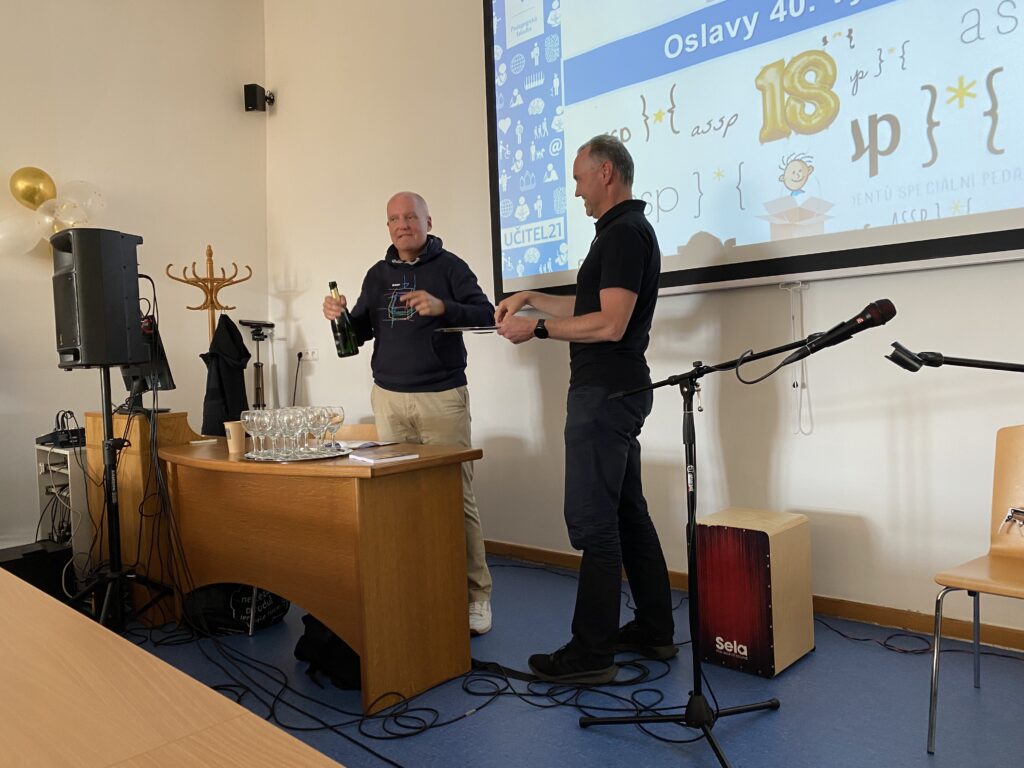
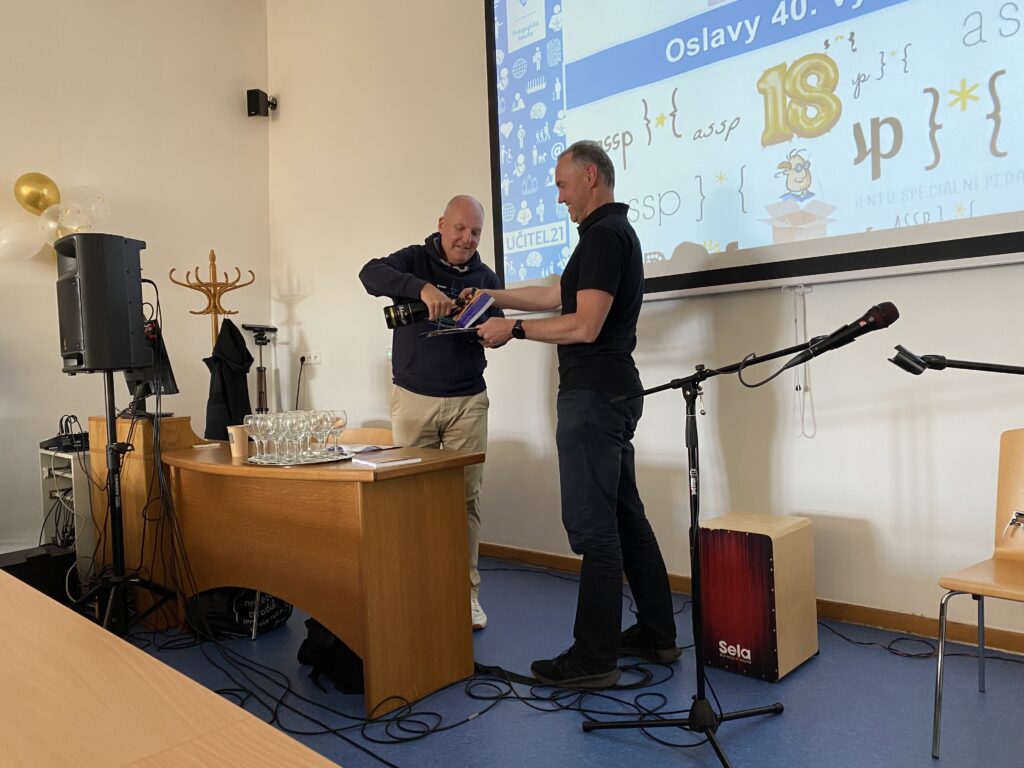
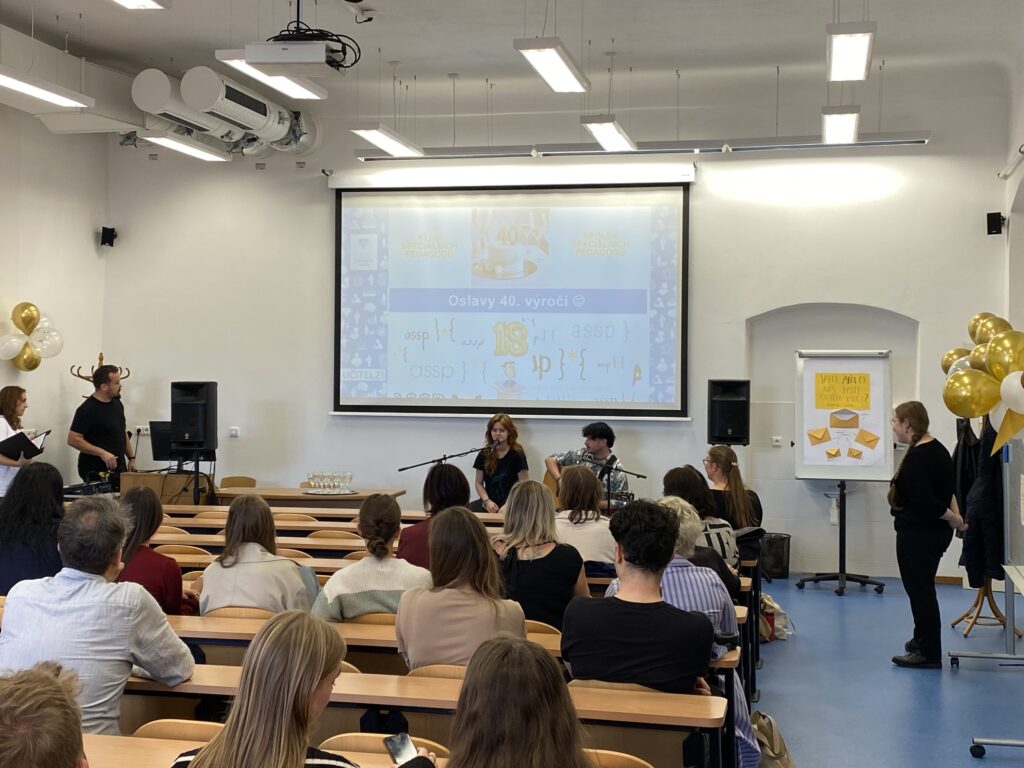
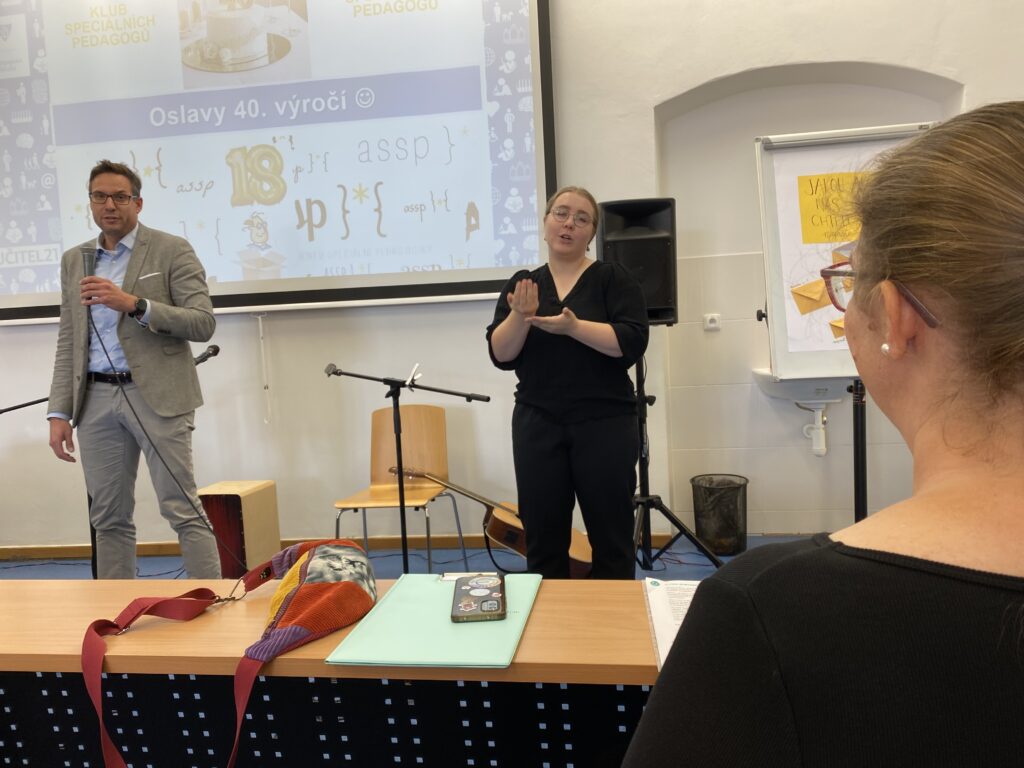
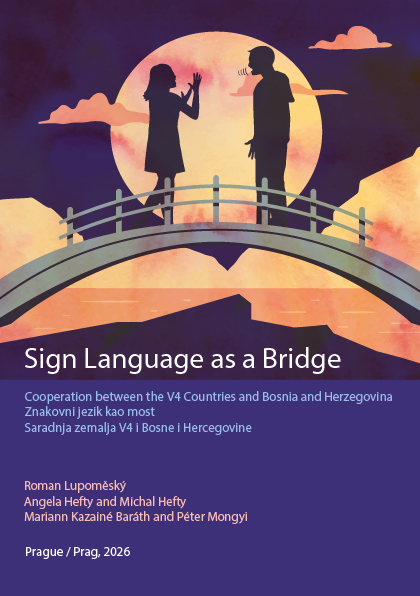
It is a great honour for me to be here today to congratulate you on the important milestone of the 40th anniversary of the Institute of Special Education in Olomouc, and at the same time to present part of the work of our organisation Neslyšící s nadějí (Deaf Hope), which has resulted in the international publication Sign Language as a Bridge.
Forty Years of Special Education
Forty years is not just a number.
It represents forty years of professional work, education, research, experience and, above all, people who have contributed to the development of special education and to creating better conditions for people with disabilities to live full and independent lives.
Over these four decades, generations of students have studied special education here. Many of them now work in education, social services, counselling, public administration, non-governmental organisations and other fields.
In my view, special education is not only a discipline concerned with people with disabilities. It is also a way of helping society better understand their needs, respect their rights and create the conditions for their meaningful participation in society.
As a Deaf person, I experience this issue very personally.
Communication is not merely an academic topic for me. It is part of everyday life. When a person cannot communicate in the way they need, a barrier arises. When they are given the opportunity to communicate in their own language, space is created for education, understanding, cooperation and independence.
That is why I greatly appreciate the work of the Institute of Special Education at Palacký University Olomouc and its long-standing contribution to education and support for people with disabilities.
Sign Language as a Bridge
The second part of my speech concerns the publication Sign Language as a Bridge.
This publication is not simply an academic book. It is the result of the joint work of five authors, including myself, and at the same time the result of international cooperation carried out throughout the project.
Each of the five authors contributed their professional experience, knowledge and perspective on the situation of Deaf people and sign language users.
Behind the individual chapters, however, there is more than professional knowledge. There are real people, their life experiences, their needs, their rights and their future.
That is why we chose the title Sign Language as a Bridge.
Sign language can be a bridge between Deaf and hearing people.
It can be a bridge between an individual and a public institution, between a student and the education system, between a patient and healthcare services, or between a community and professionals.
And it can also be a bridge between different countries and cultures.
Experience from Bosnia and Herzegovina
The project, which I had the opportunity to lead and coordinate, focused on the situation of Deaf people and sign language users in Bosnia and Herzegovina.
Bosnia and Herzegovina has a complex history and a specific institutional and administrative structure. The war in the 1990s had a profound impact on society as a whole, and its consequences also affected institutions, organisations and individual communities.
After the war, the country gradually began rebuilding its society, institutions and civil sector. For Deaf organisations, however, this process has involved and continues to involve a number of challenges.
During the project, we therefore visited six cities:
Mostar, Posušje, Bugojno, Zenica, Goražde and Sarajevo.
We met with Deaf people, representatives of their organisations, social workers, professionals and other local partners.
Each city had its own specific conditions, and each organisation had its own experiences. However, one common theme was the need for quality communication, education and accessible services in sign language.
Recognition of Sign Language Is Not Enough
During the project, we realised that the legal recognition of sign language alone does not automatically mean that the necessary conditions exist for its actual use in everyday life.
Education is needed.
Quality sign language teaching is needed.
Systematic training and continuing professional development for sign language interpreters are needed.
The principles and professional ethics of interpreting must be respected.
And above all, Deaf people themselves must be respected as full and equal members of society who have the right to communicate in their own language.
This is an area in which we identified considerable potential for further development.
Bosnia and Herzegovina does not yet have an academic and educational infrastructure in the field of sign language and interpreter education on the same scale as the one that we have the opportunity to develop here in Olomouc.
For this reason, further cooperation between Czech academic institutions and local organisations in Bosnia and Herzegovina can be highly valuable.
Our goal, however, is not to bring ready-made solutions from the Czech Republic.
We want to share experience, strengthen local capacities and jointly seek solutions that reflect the needs of the Deaf community itself.
A Bridge Has Two Sides
International cooperation only makes sense when there is dialogue.
We have our own experience.
Our partners in Bosnia and Herzegovina have their own experience.
If we can bring these experiences together, we can create new opportunities for further development.
That is why the word “bridge” is not merely a metaphor for us.
It is also a principle of cooperation.
A bridge has two sides. Genuine cooperation must connect both of them.
It is not about one side simply teaching and the other simply receiving.
It is about mutual learning, respect, sharing experience and jointly searching for solutions.
Acknowledgements
I would therefore like to thank all the partners who contributed to the project.
I would like to thank our partners from Bosnia and Herzegovina, Hungary and Slovakia, as well as all the professionals, lecturers, interpreters and organisations who contributed their time and experience.
I would also like to thank all the Deaf people who shared their experiences and perspectives on the life of their communities with us.
I would like to express special thanks to Associate Professor Langer, who provided an expert review of our publication. We greatly appreciate his professional perspective, comments and the time he devoted to reviewing the publication.
His expert review is not only an assessment of one publication. It is also an important impulse for further thinking about the development of education, sign language courses and the improvement of interpreter training in the future.
Conclusion
Today, we are celebrating 40 years of the Institute of Special Education in Olomouc.
I wish that the next forty years will not merely continue what has already been achieved, but will also be a period of searching for new paths, new forms of education, new opportunities for cooperation and new ways of better understanding people.
A society is not judged only by the laws it has.
It is also judged by whether it truly enables every person to be a part of society.
And communication is one of the most important keys.
When a person cannot communicate, a barrier arises.
When a person can communicate, there is room for understanding.
And when people begin to understand one another, cooperation can emerge.
And cooperation can build a bridge.
That is why I believe that Sign Language as a Bridge is not merely the title of a publication.
It is also our message:
A bridge between people.
A bridge between communities.
A bridge between expertise and practice.
A bridge between the Czech Republic and Bosnia and Herzegovina.
And perhaps also a bridge to the future.
Once again, I would like to warmly congratulate the Institute of Special Education in Olomouc on its 40th anniversary.
I wish Palacký University, the Institute of Special Education, the Association of Special Education, its academics, students and graduates many more successful years.
And I wish all of us that there will be more and more bridges between people.
Thank you for your attention
Roman Lupoměský